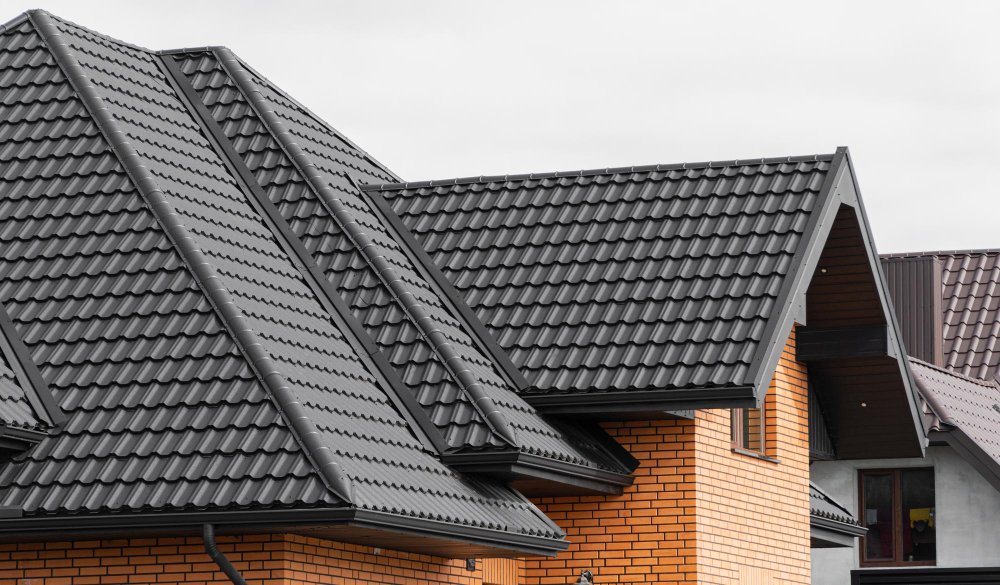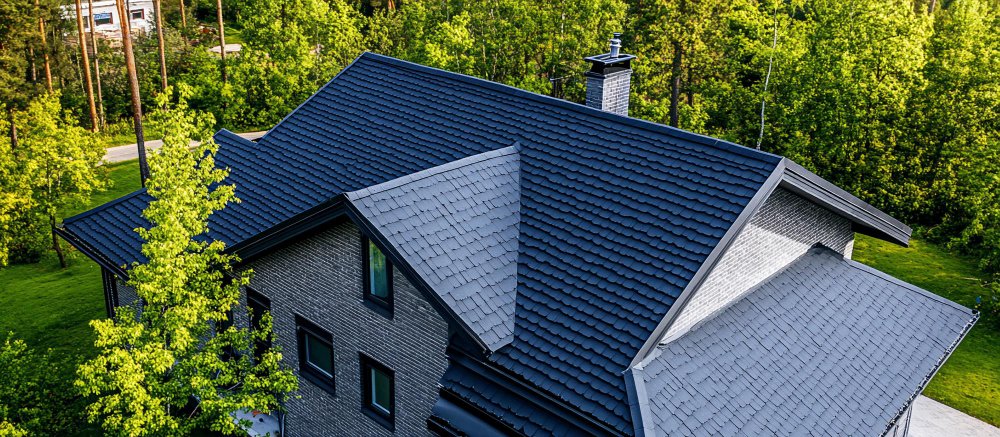
A roof does not need to dominate the architecture to improve it. Sometimes sophistication comes from knowing when to become the background.
Seen this way, choosing shingles is not a matter of finding a color that looks pleasant on a sample board. It is an exterior-design decision layered over a technical building-envelope decision. The strongest projects understand both.“The most successful composition roofs do not compete with the architecture. They complete it.”
The New Luxury Is Restraint
Luxury in exterior design is often associated with rarity: an unusual stone, a custom metal detail, an imported finish. Yet the more enduring definition may be simpler. Luxury is the ability to make every material feel intentional. Composition shingles work particularly well with this idea because their visual effect can be calibrated rather than merely displayed. A darker roof against lighter siding creates a stronger outline and can give the upper portion of a house more visual weight. A mid-tone roof related to the colors already present in the facade can create a quieter transition. Shingles with noticeable tonal variation can add depth to broad roof planes, while a more restrained palette may allow complicated architecture, stonework, or detailed siding to remain the focus. None of these approaches is universally correct. The question is what the architecture needs. A house with multiple gables, several siding colors, prominent masonry, contrasting trim, and numerous exterior details may already contain enough visual information. Adding a highly variegated roof can make the composition busier. On a simpler elevation, additional shingle texture may provide welcome depth.The roof can occupy a substantial portion of the visible exterior on many homes. Treating roof color as an isolated finish rather than part of the full elevation can create unnecessary visual competition.
Choose shingles against the whole exterior palette, not simply against another roofing sample. The objective is not to select the most interesting shingle in isolation—it is to select the roof that makes the entire house more coherent.
“Good exterior design is not a competition for attention. It is an agreement between materials.”
What You Don’t See Is the Real Specification
Once the color is selected and the architectural conversation feels resolved, composition roofing reveals its less glamorous—and arguably more important—side. A homeowner may say, “We chose this shingle.” A roofing professional has to think beyond that sentence. What is the condition of the existing deck or substrate? What underlayment is appropriate for the selected assembly and project? How will valleys be handled? What happens where the roof meets a wall? How are penetrations integrated? What flashing details are required? How do edges, ridges, and ventilation components where applicable relate to the rest of the system? The answers are not decorative, but they are part of the roof you are buying.“The shingle gets the photograph. The hidden assembly earns the trust.”Two houses can therefore display remarkably similar shingles and represent very different roofing projects. One may involve a straightforward roof geometry with relatively few penetrations. Another may contain valleys, intersecting roof planes, skylights, wall transitions, mechanical penetrations, and additions constructed at different times. The visible material may be nearly identical. The detailing challenge is not.
A beautiful shingle cannot compensate for unresolved substrate, flashing, drainage, or installation problems. Material selection and assembly design must support each other.
The premium version of a composition roof is not simply a premium-looking shingle. It is a roof in which the visible material and the invisible details have been considered with equal seriousness.
That distinction sets up the larger design question: how should composition roofing respond to the architecture of a particular region and a particular house? In the Bay Area, where residential styles and remodeling histories can vary considerably from one property to the next, the answer begins with the building rather than the sample board.Bay Area Architecture Changes the Conversation
There is no single Bay Area house, and that is precisely what makes roof selection interesting. Traditional homes sit alongside ranch-inspired properties, Craftsman influences, contemporary renovations, suburban houses, and buildings reshaped by additions completed years or even decades apart. Some elevations reveal large expanses of roof from the street. Others keep the roof visually secondary behind strong wall planes, mature landscaping, or low-pitched geometry. For anyone considering Asphalt Shingle Roofing in the Bay Area, this diversity argues against choosing a roof by trend alone. The same shingle can feel refined on one house and unnecessarily busy on another because architecture changes how the material is perceived. A roof with multiple gables and intersecting planes naturally creates more shadow and visual movement than a broad, simple roof. Adding a strongly variegated shingle to the first may amplify an already complex composition. On the second, additional tonal variation may provide precisely the dimension the exterior needs. The amount of visible roof matters just as much. When the roof occupies a major portion of the street-facing elevation, its color becomes one of the home’s largest visual fields. When relatively little roofing is visible, the shingle may work more as an edge or frame around the architecture.Whenever possible, evaluate a roofing color at a meaningful scale. A hand-sized sample and thousands of repeated shingles across a roof plane can create very different visual impressions. Installed references can provide additional context when available.
The right shingle should look as though the architecture asked for it—not as though the roof was selected from a separate catalog.
This does not mean every exterior component should match. In fact, overly coordinated palettes can become flat. Contrast can be useful when it clarifies the architecture. The goal is relationship rather than sameness. A dark roof, for example, may deliberately sharpen a light exterior. A softer mid-tone can reduce the visual separation between roof and wall. A color that picks up a secondary tone in masonry can create continuity without looking artificially matched.Before committing to a shingle, consider roof + siding + trim + masonry + gutters/fascia + windows + permanent exterior elements as one composition. A roofing choice should improve the hierarchy of the entire facade.
“Regional style can guide the conversation. The house itself should make the final argument.”
The Details That Separate Ordinary from Considered
There is a temptation in home improvement to define premium by price alone. The more expensive finish becomes the better finish; the most visually dramatic product becomes the upgrade. Composition roofing resists that simplification. A considered roof is often defined by coordination. The shingle works with the scale of the house. Its color relates to the facade without fighting it. Valleys are treated as part of the roofing system rather than inconvenient interruptions. Flashing receives the same seriousness as the visible field. Penetrations are integrated deliberately. Roof-to-wall intersections recognize both roofing and wall-water management. Edges and ridge conditions look resolved rather than accidental. Even gutters matter. They create a strong line at the edge of the roof and participate in moving collected water away from roof surfaces. Their relationship to fascia, roof color, and exterior trim can affect both function and appearance. Solar planning deserves similar coordination. If solar installation is anticipated, discussing it during roofing decisions can help avoid treating the roof and solar array as unrelated projects. The same is true for skylights, vents, and other rooftop components that interrupt the finished surface.Roof replacement is one of the rare moments when a homeowner can reconsider a large portion of the exterior at once. That does not mean the siding, gutters, fascia, trim, paint, and solar system all need replacement. It means their relationships deserve consideration before the roof becomes the new fixed element.
The best composition roof is not necessarily the one with the loudest texture, darkest color, or most expensive label. It is the one that makes the house feel more resolved while giving the underlying roofing assembly the technical attention it deserves.
“Good composition roofing rarely asks you to admire the roof first. It asks you to admire the house—and only later realize how much the roof contributed.”That may be the most modern definition of premium exterior design: not adding more visual noise, but making every component feel more inevitable.